
Welcome to Our Blog!
Welcome to all things Green! This is where we explore everything from new laws, trending topics, new canna products, ways to improve your Canna-style!
August 02, 2026
The New Federal Hemp Restrictions Taking Effect in November 2026: What Pittsburgh Consumers Need to Know
If you've purchased CBD gummies, THC seltzers, THCA flower, or full-spectrum hemp tinctures recently, you may be wondering what comes next.
Beginning November 12, 2026, a major change to federal hemp law is scheduled to take effect, dramatically changing which hemp-derived products can legally remain on store shelves. While many headlines have referred to it as a "hemp ban," the reality is more nuanced. Hemp itself isn't being outlawed. Instead, Congress has adopted a new definition of legal hemp that could make the vast majority of today's cannabinoid products non-compliant with federal law. For consumers and businesses throughout Pittsburgh and Pennsylvania, these changes could reshape the local hemp marketplace.
Here's what you need to know.
What Changed?
To understand the new law, it helps to look back at the 2018 Farm Bill.
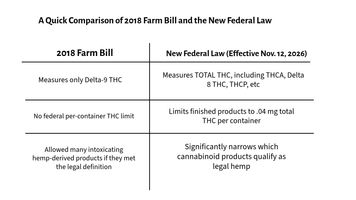
That legislation legalized hemp nationwide by defining it as cannabis containing no more than 0.3% delta-9 THC on a dry-weight basis. While the goal was to legalize industrial hemp and CBD production, the law also created an opportunity for manufacturers to develop products containing cannabinoids like Delta-8 THC, THCA, and hemp-derived Delta-9 THC that technically met the legal definition of hemp.
Over the past several years, those products have become common in CBD shops, smoke shops, convenience stores, and specialty retailers across Pennsylvania.
Congress has now decided to close what many lawmakers describe as a loophole. Section 781 of H.R. 5371, enacted in November 2025, revises the federal definition of hemp beginning November 12, 2026. Instead of measuring only delta-9 THC, the law adopts a broader total THC standard and establishes strict limits for finished hemp-derived cannabinoid products.
Why Did Congress Make This Change?
Supporters of the legislation say the hemp market has evolved far beyond what Congress intended when it passed the 2018 Farm Bill.
Lawmakers, including Senator Mitch McConnell—who helped author the original Farm Bill—have argued that intoxicating hemp products have been sold with inconsistent regulations, sometimes in locations like gas stations and convenience stores. Supporters also point to concerns over youth access, misleading marketing, and reports of accidental THC exposure among children.
Many lawmakers believe stronger federal standards were necessary to distinguish traditional industrial hemp from intoxicating cannabinoid products.
The hemp industry, however, sees things very differently.
Industry organizations argue that responsible businesses already support age restrictions, laboratory testing, accurate labeling, and child-resistant packaging. They contend that replacing those safeguards with an extremely low THC limit effectively removes most products from the market rather than regulating them.
The U.S. Hemp Roundtable estimates that more than 95% of current hemp extract products could fail to meet the new federal definition if no changes are made before the law takes effect.
What Products Could Be Affected?
Although every product is different, consumers could see significant changes in the availability of:
CBD gummies
Hemp-derived THC gummies
Delta-8 products
THCA flower
Hemp beverages
Full-spectrum CBD tinctures
Some CBD topical products containing trace THC
It's important to note that industrial hemp used for fiber, grain, textiles, and similar purposes is not the primary target of these changes. The law is focused on hemp-derived cannabinoid products intended for human or animal use.
What Could This Mean for Pennsylvania?
Pennsylvania has developed a sizable hemp economy over the past several years, with growers, processors, manufacturers, distributors, and retailers serving consumers throughout the state.
Many local businesses have built their operations around products that comply with the existing federal framework established in 2018.
If the new law takes effect as scheduled, those businesses may need to reformulate products, adjust inventory, or shift their business models entirely.
Industry groups estimate that the broader U.S. hemp market represents approximately $28–30 billion in annual economic activity and supports roughly 300,000 jobs nationwide. Those figures come from industry estimates and are frequently cited by hemp advocacy organizations.
For Pittsburgh consumers, the biggest impact may simply be fewer product choices and changes in what local retailers are legally able to sell.
Is This the End of Hemp?
Not exactly.
One of the biggest misconceptions is that hemp itself is becoming illegal.
That's not what the law does.
Industrial hemp used for fiber, textiles, grain, construction materials, and other non-intoxicating purposes remains legal under federal law.
Instead, the legislation dramatically changes how hemp-derived cannabinoid products are defined and regulated.
That distinction matters because it explains why many experts describe the law as a major restructuring of the cannabinoid market rather than a blanket prohibition on hemp.
Can the Law Still Change?
Possibly.
Since the legislation was enacted, several lawmakers and industry organizations have pushed for revisions before the November 2026 implementation date.
Various proposals have been introduced that would delay implementation or replace the current limits with a different regulatory framework focused on product testing, labeling, and age restrictions instead of an across-the-board THC threshold.
Whether any of those proposals ultimately become law remains uncertain.
For now, businesses across the country are preparing for the possibility that the current rules will take effect as scheduled.
What Should Consumers Do?
If you regularly purchase hemp-derived products, now is a good time to stay informed rather than panic.
Here are a few practical steps:
Keep an eye on updates from reputable news sources and official government agencies.
Ask local retailers how they're preparing for the upcoming changes.
Support businesses that prioritize third-party testing and transparent labeling.
Follow legislative developments, as Congress could still modify the law before the implementation date.
Most importantly, remember that this situation is still evolving.
Final Thoughts
The federal hemp changes scheduled for November 12, 2026 represent one of the most significant shifts in hemp regulation since the 2018 Farm Bill.
For consumers, the changes could mean fewer hemp-derived cannabinoid products available on store shelves. For businesses, they may require major operational changes or new product strategies. And for lawmakers, the debate continues over whether these restrictions strike the right balance between consumer safety and preserving an industry that has grown rapidly over the past seven years.
As the implementation date approaches, one thing is certain: the conversation around hemp is far from over.
We'll continue monitoring federal and Pennsylvania developments and provide updates as new information becomes available.

May 27, 2026
More Than a Logo: Meet Car2unes & What He Stands For
You’ve seen the logo. Now meet the person behind it.
We’re collaborating with Car2unes on a new merch collection, and instead of us telling his story, he wanted to share it himself, in his own words, no filter. This is why the logo exists. This is what he stands for.
His words:
“My inspiration for music comes from a lot of childhood trauma. I’ve been using music as a therapeutic tool to help me navigate my feelings and emotions. It’s been a rollercoaster figuring out how to regulate myself before I turned to music.
I used to wake up every day just absolutely hating life. I felt like I was wasting my life away. I was depressed, suicidal, ready to give up and call it quits.
A lot of musicians have really helped with my creative process: Mac Miller, Juice Wrld, Russ, XXXTentacion, Matchbox Twenty, Suicideboys. I grew up listening to nothing but rock and heavy metal, but there was always this one thing about hip hop I couldn’t shake.
My dad was in a band, and so were my brothers. I was surrounded by music all the time. I ended up getting my first acoustic guitar and taught myself everything I know about it. I just have a love for string instruments. I spent most of my life living right outside Pittsburgh, but grew up mainly around Gibsonia.
The thing I stand for the most is growth. Healing. Having the ability to talk and communicate without being shut down and ignored. We all have a purpose in life, it may not be present yet, but that’s the fun part. We get to find what we’re good at and push ourselves to our fullest potential.
I just want everyone to know: You are okay. Even on the cloudiest day, the sun is still shining. We have to be the light in this dark world. There’s too much pain and hatred. We need to come together and support one another.
I’ve attempted to take my life too many times. If it wasn’t for music, I wouldn’t be here. 🤍”
What the merch represents:
The logo on each piece isn’t just a graphic, it’s a symbol of survival, growth, and showing up anyway. Every time you wear it, you’re carrying his story and his message: You are okay, even on the cloudiest day.

February 02, 2026
More Than a Magnet: Our Stance Against ICE and Why Your Voice Matters
From Personal Anger to Purposeful Action
Sometimes, reading the headlines is enough to turn your stomach. Stories of families torn apart, children held in inhumane conditions, and needless deaths in custody aren’t just news items—they’re a call to our collective conscience . Like many of you, we felt a deep sense of outrage and a frustrating helplessness. We asked ourselves: how do we channel this anger into something that actually helps?
Our “Fuck ICE” magnets were born from that exact place. They are not just products; they are a form of "rage crafting"—a tradition where hands transform fury and grief into tangible expressions of solidarity and resistance . For us, this is personal. With family histories shaped by migration and the struggle for a better life, the fight for immigrant dignity isn’t abstract; it’s in our blood . We believe that art, craft, and everyday objects can be powerful canvases for political speech, echoing a long history of resistance through creative means.
The Growing Movement Against ICE: You Are Not Alone
What started as a personal statement is part of an unprecedented, nationwide groundswell of opposition. Public sentiment has decisively shifted, with recent polls showing more Americans now support abolishing ICE than keeping it . This isn’t a fringe view; it’s a mainstream demand for humanity and justice. The movement is vast and creative:
Mass Mobilizations:
Cities like Minneapolis have seen tens of thousands brave subzero temperatures to march, chanting “ICE Out!” and honoring victims like
Alex Pretti and Renee Nicole Good
Everyday Solidarity:
Communities have built intricate “ICE watch” networks, where volunteers keep vigil to protect their neighbors. Small businesses post signs denying service to ICE agents, and neighbors run errands for those afraid to leave home .
Celebrity Voices:
Prominent LGBTQ+ and ally celebrities, including Billie Eilish, Lady Gaga, and Hannah Einbinder, are using their platforms to call for the abolition of ICE and draw attention to the crisis .
A Crafting Revolution:
From the viral “Melt the ICE” red knit hat
pattern (a direct descendant of WWII Norwegian resistance symbols) to protest nail art and embroidered tributes, makers are embedding messages of resistance into their crafts . Our magnets are part of this fiber of creative protest.
Turning Words into Action: How to Go Beyond the Magnet
A magnet is a starting point, not the end point. Here’s how you can join the broader fight:
Support Direct Aid Organizations:
Consider donating to groups providing critical legal, housing, and material support to immigrants and those affected by raids, such as the
San Diego Rapid Response Network or RAICES
.
Educate and Amplify:
Follow and share stories from immigrant-led organizations and independent journalists on the ground. Break the silence that allows injustice to continue.
Pressure Decision-Makers:
Call your congressional representatives. Demand they support legislation to halt deportations, shut down detention centers, and cut funding to ICE .
Practice Local Solidarity:
Find or start a community defense network in your area. Support immigrant-owned businesses. Let your neighbors know they are not alone.
A Final Word of Solidarity
The message is simple, but the meaning is profound: Fuck ICE. We will never support systems rooted in hate, separation, and fear . Our crafts are made with the hope that they serve as a tool for awareness, a badge of solidarity, and a catalyst for your own action.
By choosing this magnet, you’re doing more than organizing your space. You’re declaring which side of history you stand on. You’re telling a neighbor, a coworker, or a family member that they are safe with you. And you’re adding your voice to a chorus that is growing too loud to ignore.
Thank you for your courage, your compassion, and your commitment to building a more just world.
In solidarity,
The Greenhouse 412
November 11, 2025
A Step Back: How Congress and the President Just Outlawed Your Legal Hemp
The Farm Bill Loophole Is Closed. Here’s What That Means for the Future of Cannabis.
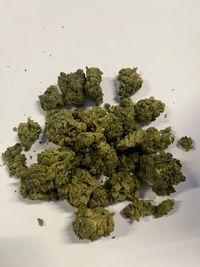
If you’ve walked into a smoke shop or dispensary in the last few years, you’ve seen the shelves lined with products that looked, smelled, and felt like cannabis. But thanks to a legal distinction, they were sold as legal "hemp"—rich in a compound called THCA. That era has officially ended.
In a quiet but monumental move, the U.S. House of Representatives, Senate, and the President have reenacted a federal ban on hemp, specifically targeting the loophole that allowed for the sale of intoxicating hemp products. For consumers and advocates of cannabis freedom, this is a significant step backward.
Let’s break down what just happened, why it matters, and what comes next.
What Was the "THCA Loophole"?
To understand the impact, we need to revisit the 2018 Farm Bill. This landmark legislation legalized hemp by defining it as the cannabis plant containing 0.3% or less of Delta-9 THC on a dry weight basis.
The key was "Delta-9 THC." Cannabis plants produce THCA (tetrahydrocannabinolic acid), which is the non-intoxicating precursor to Delta-9 THC. When you heat THCA (through smoking, vaping, or baking), it converts into the psychoactive Delta-9 THC. This meant that a hemp flower could be bred to have high levels of THCA while still testing under the 0.3% Delta-9 THC limit, making it federally legal but producing the same effects as traditional marijuana when consumed.
This loophole created a multi-billion dollar industry, providing legal access to cannabis-like products in states without medical or recreational marijuana laws.
The Ban: A Direct Attack on Legal Access
The recently passed 2024 Farm Bill reauthorization did not simply renew the old rules. It included an amendment that fundamentally changes the legal definition of hemp.
The new language closes the THCA loophole by redefining hemp based on its total potential THC.
This means that testing will now likely account for the potential conversion of THCA into Delta-9 THC. If a hemp product’s THCA content would push it over the 0.3% total THC limit after decarboxylation (heating), it is now considered illegal marijuana under federal law.
This action effectively:
Criminalizes a Legal Industry:
Thousands of legitimate hemp farmers, processors, and retailers who operated in compliance with the
letter
of the 2018 law now find their businesses and products federally illegal.
Harms Consumers:
It removes a safe, legal, and tested source of cannabis for millions of adults, particularly those in prohibition states who relied on this access.
Reinforces Prohibitionist Logic:
It doubles down on the flawed idea that we can legislate cannabis based on arbitrary chemical percentages rather than a rational framework for adult use.
Why This Is a Flawed and Hypocritical Move
This ban is being framed as a "public safety" measure, but that argument doesn't hold up to scrutiny.
It Ignores the Real Issue:
The problem isn't the chemical structure of the plant; it's the lack of a coherent federal legal framework for cannabis. While some states have legalized cannabis entirely, the federal government is now making a
broader
category of the plant illegal. This creates more confusion, not less.
It Punishes Legitimate Business:
This move pulls the rug out from under an industry that invested millions in good faith under the previous federal policy.
It Fuels the Illicit Market:
By restricting legal access, this ban will inevitably drive consumers back to the unregulated, untested black market, where product safety is never guaranteed.
Where Do We Go From Here? The Fight is Not Over
This is a frustrating setback, but it is not the end of the road. The cannabis reform movement has faced obstacles before and has always persevered. This action, in fact, highlights the absolute necessity for comprehensive federal cannabis legalization.
Here’s what we can do:
Stay Informed:
Follow reputable cannabis news sources and advocacy groups like NORML, the Marijuana Policy Project, and others.
Contact Your Representatives:
Make your voice heard. Tell them that this piecemeal, prohibitionist approach is unacceptable. Demand their support for full federal descheduling and legalization of cannabis.
Support State-Level Reforms:
If you live in a state where cannabis is illegal, get involved with local advocacy efforts. State-level victories create pressure on the federal government to act.
Support Legal Businesses:
Continue to support licensed, regulated dispensaries in legal states and the remaining compliant sectors of the hemp industry (like CBD).
The Bottom Line
The reinstatement of the hemp ban is a stark reminder that our fight for cannabis freedom is far from won. It was a decision made out of political convenience, ignoring the will of the vast majority of Americans who support legal access.
While a legal avenue has been closed, the demand for cannabis and the principles of personal freedom and sensible policy have not changed. Let this moment galvanize us. Let’s turn our frustration into action and redouble our efforts to end the failed war on cannabis once and for all.

June 8, 2025
The Loophole in the 2018 Farm Bill: Is Intoxicating Hemp on Its Way Out?
Since the 2018 Farm Bill was passed, hemp has seen a major comeback—but not without controversy. The bill legalized hemp products containing less than 0.3% Delta-9 THC by dry weight, the primary psychoactive compound in cannabis. However, it didn’t account for THCA—the non-psychoactive precursor to THC that becomes intoxicating when heated (for example, through smoking or baking). This oversight created a loophole that farmers and businesses quickly capitalized on.
As a result, products containing high levels of THCA, Delta-8 THC, Delta-10 THC, and even newer compounds like THCP began flooding the market under the label of "legal hemp." These products remain technically legal as long as they meet the Delta-9 THC threshold, despite having similar intoxicating effects when consumed.
Now, lawmakers are catching on. Efforts are underway to amend the Farm Bill and close this loophole by including all intoxicating cannabinoids, regardless of whether they’re derived from hemp or how they convert once consumed.
What do you think—should these hemp-derived cannabinoids remain legal?